
Best Value Non-Owner SR-22 Insurance — Texas
Free to compare
Why Non-Owner SR-22 Costs More Than It Should in Texas
You called three carriers for non-owner SR-22 quotes and received three nearly identical rates — all between $110 and $130 per month. The quotes feel wrong because you're not insuring a vehicle, yet you're paying close to what a standard liability policy costs. This pricing disconnect is not accidental: most national carriers funnel non-owner SR-22 applicants into their standard underwriting queues rather than maintaining separate non-owner rate tables, inflating premiums by 30% to 50% compared to carriers specializing in suspended-license reinstatement.
Texas non-owner SR-22 premiums vary by a factor of three across the carrier landscape. The cheapest carriers — GAINSCO, Dairyland, Bristol West — quote suspended drivers between $45 and $70 per month for minimum-liability non-owner coverage with SR-22 filing. The most expensive — typically preferred-tier carriers writing non-owner policies as courtesy products — quote $120 to $140 for identical coverage. The difference is not coverage quality or claims handling; it is market positioning. Non-standard carriers price non-owner SR-22 competitively because suspended drivers are their core market. Preferred carriers price it as a loss leader they would prefer not to write.
“The cheapest carriers quote $45–$70 monthly; the most expensive quote $120–$140 for identical coverage — difference is market positioning, not quality.”

Line Up Texas Coverage Before Reinstatement
Get My Texas Suspended License Insurance Quote$45–$95/mo
Texas Non-Owner SR-22 Range
Monthly premium for minimum-liability non-owner SR-22 coverage in Texas, reflecting variation across non-standard carriers serving suspended drivers. Quotes assume single DWI with no additional violations. Second DWI or multiple points violations push premiums into the $110–$160 range.
Carrier rate filings, Texas Department of Insurance
What Non-Owner SR-22 Actually Covers in Texas
Non-owner SR-22 is liability-only coverage that follows you when you drive vehicles you do not own. It satisfies Texas's mandatory $30,000 per person / $60,000 per accident bodily injury liability and $25,000 property damage requirement, plus the SR-22 financial responsibility filing Texas DPS requires for suspended-license reinstatement. The policy does not cover damage to the vehicle you are driving — that vehicle's owner must carry collision and comprehensive if they want vehicle damage protection.
The policy activates only when the vehicle owner's insurance does not apply. If you borrow a friend's car and cause an accident, their liability policy pays first up to its limits. Your non-owner policy acts as excess coverage above those limits. This stacking structure means non-owner policies carry lower collision risk than standard policies, which is why premiums should be significantly lower — though not all carriers price accordingly.
Texas DPS accepts non-owner SR-22 for reinstatement as long as the policy remains active for the full two-year SR-22 filing period required under Texas Transportation Code §601.153. If the policy lapses, the carrier notifies DPS electronically within 24 hours and your license is re-suspended immediately. Maintaining continuous coverage is not optional; it is the condition of your reinstatement.
Most comparison tools default to standard policies and bury non-owner options three clicks deep, causing applicants to abandon before finding the correct product.



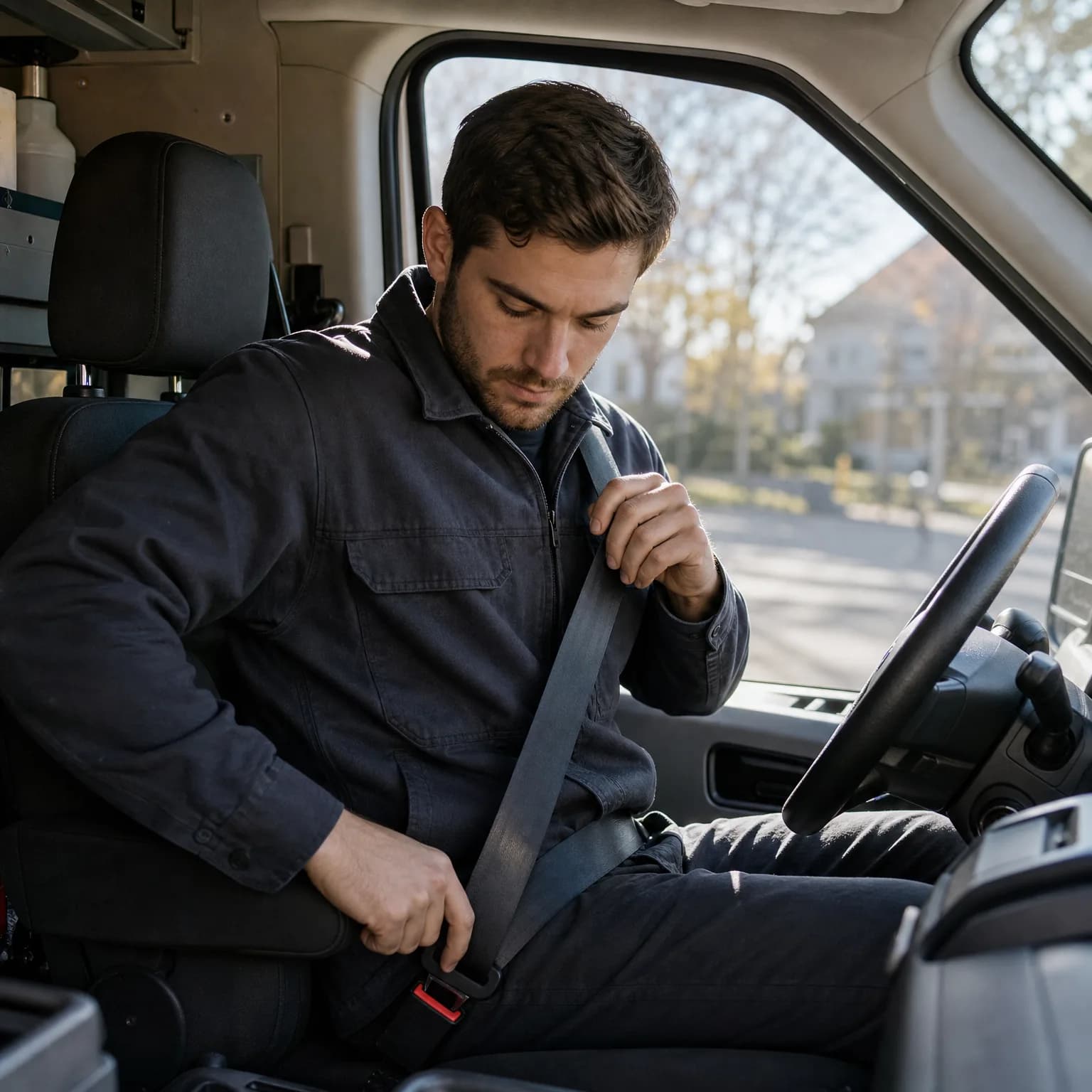
How Violation Type and Timing Affect Non-Owner SR-22 Rates
Single first-offense DWI with no other violations in the past three years produces the lowest non-owner SR-22 premiums — the $45–$70 range from non-standard carriers. Add a second DWI or a reckless driving conviction and premiums jump to $90–$140 even from the same carriers. Carriers price the second violation exponentially, not linearly, because it signals pattern behavior rather than isolated error.
Time since conviction matters more than most applicants realize. A DWI conviction six months old costs 30% to 50% more to insure than the same conviction 18 months old, even though both require the same two-year SR-22 filing period. Carriers re-tier risk annually; if you obtain non-owner SR-22 immediately after suspension and maintain clean driving for 12 months, you become eligible for mid-term re-rating at many non-standard carriers. Ask your agent whether the carrier supports annual re-underwriting for non-owner policies.
Multiple points suspensions (Texas suspends at 4 moving violations in 12 months or 7 in 24 months under Transportation Code §521.292) price similarly to single DWI if the underlying violations are minor — speeding, failure to signal, expired registration. If any of the four violations involved an accident, collision, or aggressive driving charge, underwriting treats the suspension as higher risk and premiums rise into the $100–$150 range even for non-owner coverage.
Uninsured-driving suspensions under TexasSure produce the widest rate variation. Some carriers view lapse-triggered suspensions as administrative errors and price them at the low end ($50–$70/mo). Others view them as financial responsibility failures and price them identically to DWI ($90–$120/mo). GAINSCO and Dairyland fall into the first camp; Progressive and State Farm fall into the second. If your suspension resulted from insurance lapse rather than DWI or points, prioritize non-standard carriers in your comparison.
$600–$900
Two-Year Cost Spread
Total premium difference over the mandatory two-year SR-22 filing period between the cheapest non-standard carrier ($45/mo) and the most expensive preferred carrier ($85/mo) writing non-owner SR-22 in Texas. This spread widens to $1,200–$1,800 for applicants with second DWI or multiple violations.

Why Some Carriers Will Not Quote Non-Owner SR-22 at All
Allstate, Farmers, and Liberty Mutual maintain non-owner policy forms on file with Texas Department of Insurance but decline to quote them for SR-22 applicants in practice. When you call or submit an online quote request specifying non-owner SR-22, these carriers either redirect you to their standard auto product (which requires vehicle ownership) or inform you they do not write non-owner coverage in Texas. The policy form exists; the underwriting appetite does not.
This refusal is market segmentation, not regulatory constraint. Preferred-tier carriers write suspended drivers reluctantly and only when required by state assigned-risk mechanisms. Non-owner SR-22 applicants represent higher administrative cost (manual underwriting, SR-22 filing coordination with DPS, higher lapse risk) for lower premium volume. These carriers would rather not compete in this segment, so they price themselves out or decline applications outright. Do not waste time attempting to obtain quotes from carriers explicitly targeting clean-record drivers; their underwriting systems will reject your application before it reaches a human reviewer.
What to Do Right Now
Obtain quotes from at least three non-standard carriers before selecting coverage. Use GAINSCO, Dairyland, and Bristol West as your baseline; add The General or Progressive if your violation profile includes complications those three may decline. Request quotes for identical coverage limits ($30,000/$60,000/$25,000 minimum liability) so rate comparison is direct. Ask each agent whether the carrier supports annual re-underwriting for non-owner policies — this feature alone can save you $200 to $400 in year two of your SR-22 filing period.
Verify the carrier will file SR-22 electronically with Texas DPS within 24 hours of policy inception. Paper SR-22 filings still exist at some small regional carriers and delay reinstatement by 7 to 10 business days. Electronic filing is standard at all six carriers named above. Once your policy is active and DPS confirms SR-22 receipt, you can proceed with license reinstatement. Compare current non-owner SR-22 rates from Texas carriers writing suspended drivers on our Texas SR-22 insurance page.
Carriers Writing Competitive Non-Owner SR-22 in Texas
GAINSCO quotes $45–$65/mo for minimum-liability non-owner SR-22, the lowest floor in Texas for single-DWI applicants with clean records otherwise. GAINSCO is a Fort Worth-based non-standard carrier (NAIC 40150, AM Best A-) writing exclusively in Texas and surrounding states. Their underwriting is built for suspended drivers; they do not penalize non-owner applications the way national carriers do. Quote online or through an independent agent. Dairyland quotes $50–$75/mo, slightly higher than GAINSCO but with broader geographic footprint and slightly more flexible underwriting for applicants with multiple violations. Dairyland (part of Sentry Insurance) writes non-owner SR-22 in 43 states and maintains separate rate tables for non-owner policies rather than repurposing standard-policy underwriting.
Bristol West (underwritten by Security National Insurance Co, NAIC 33120) quotes $55–$80/mo. Bristol West accepts higher-risk profiles than GAINSCO or Dairyland — second DWI, multiple points suspensions, or recent at-fault accidents — though premiums rise accordingly. The General quotes $60–$95/mo and writes non-owner SR-22 with no vehicle ownership verification, useful for applicants transitioning between vehicle ownership statuses. Progressive quotes $70–$110/mo for non-owner SR-22, higher than non-standard specialists but with stronger brand recognition and slightly better claims service ratings. Progressive's online quote flow supports non-owner applications directly without requiring agent assistance. State Farm quotes $85–$140/mo, the highest in this group, but accepts non-owner SR-22 applications from existing customers or applicants with long prior State Farm history, making them viable for drivers returning to State Farm after reinstatement.
Get Your Free Quote
Get My Texas Suspended License Insurance QuoteFrequently Asked Questions
Can I get non-owner SR-22 insurance if I have never owned a car?
Yes. Non-owner SR-22 is designed for drivers without vehicle ownership. Texas DPS accepts non-owner SR-22 for reinstatement as long as the policy meets minimum liability limits and remains active for the required two-year filing period. Carriers do not require prior ownership history.
Does non-owner SR-22 cover me if I borrow someone else's car?
Non-owner SR-22 provides liability coverage when you drive vehicles you do not own, but only as excess coverage above the vehicle owner's policy. The owner's insurance pays first; your non-owner policy covers amounts exceeding those limits. It does not cover damage to the borrowed vehicle itself.
How much does non-owner SR-22 cost in Texas after a DWI?
Texas non-owner SR-22 after a single first-offense DWI runs $45–$95 per month depending on carrier. GAINSCO and Dairyland quote at the low end ($45–$65/mo); Progressive and State Farm quote at the high end ($70–$95/mo). Second DWI or additional violations push premiums to $90–$160 monthly.
Can I switch non-owner SR-22 carriers during my two-year filing period?
Yes, but the switch must be seamless with no coverage gap. Your new carrier must file SR-22 with Texas DPS before the old policy cancels. If DPS receives a cancellation notice without a replacement filing already on record, your license is re-suspended immediately. Coordinate the transition through your agent to ensure continuous filing.
Will my non-owner SR-22 rate go down after one year of clean driving?
Some carriers re-underwrite non-owner SR-22 policies annually and lower premiums if you maintain violation-free driving. GAINSCO, Dairyland, and Bristol West support mid-term re-rating; Progressive and State Farm typically do not. Ask your agent at policy inception whether annual re-underwriting applies to your policy.
Do I need non-owner SR-22 if I only drive occasionally?
Yes, if Texas DPS requires SR-22 for your reinstatement. The SR-22 filing requirement is not tied to how often you drive; it is a condition of maintaining your license after suspension. Non-owner SR-22 must remain active for the full two-year period regardless of driving frequency. Letting the policy lapse triggers immediate re-suspension.